What Is Vegan Leather? The Hidden Plastic Reality Behind the "Eco" Label
The Chemistry, The Marketing, and The Truth
The Cruelty-Free Dilemma
You want to make a smart decision. You see a lovely purse with a tag that says "100% Vegan Leather." You picture yourself looking good while protecting animals and the planet.
But a year later, the handles start to come off. The edges break. You throw it away, and you realize that you just sent a piece of plastic to a landfill where it will stay for 500 years.
You're not the only one. This happens all the time.
People want to buy eco-friendly products, but fashion brands use confusing marketing language to hide cheap materials. The system doesn't work.
We skip the marketing fluff in this guide. We'll explain what vegan leather is made of, show you how to spot greenwashing, and show you how to find materials that are really good for the planet.
The Bottom Line: What Is Vegan Leather?
First and foremost, vegan leather is any material that looks and feels like leather but doesn't use animal skins or animal testing.
That's the whole definition.
It doesn't mean that it is organic. It doesn't mean that it can break down. It just means that no animals were hurt to make it.
Based on our research on sustainable textiles, we found that the market usually divides vegan leather into three groups:
1. Regular synthetics (like plastic)
2. Composites made from plants (plants mixed with plastic)
3. Materials grown from living things (mycelium)
We need to talk about a big hole in the law before we look at those materials.
The Big Lie: Not all plastic is cruelty-free
"Vegan = Protecting Animals = Eco-Friendly" is a popular equation among fast fashion brands.
This is a smart lie.
Organizations like PETA say that a product can only get the "vegan" label if it is good for animals. The certification process doesn't look at how much carbon footprint, plastic, or biodegradability a product has.
What is the truth? A bag that is 100% vegan can also be 100% plastic.
You don't have to buy cowhide when you buy a "cruelty-free" jacket made of PVC, but you do support the fossil fuel industry. As these plastics break down over time, they release tiny bits of plastic into our oceans, which is even worse.
Figuring out the labels: Faux, Vegan, and Plant-Based
Brands use fancy words to make cheap materials sound high-end. You have already won half the battle if you know what these three words mean.
- Faux Leather (The Honest Fake): This is the old-fashioned name. Brands that use this word are telling the truth: it's fake leather. It usually means early PVC or PU materials. It doesn't cost much and flakes off quickly.
- Vegan Leather (The Marketing Mask): This is a general term. A piece of plastic that just came out of a chemical plant can legally call itself "vegan leather." It has the least expensive fake leather on the market.
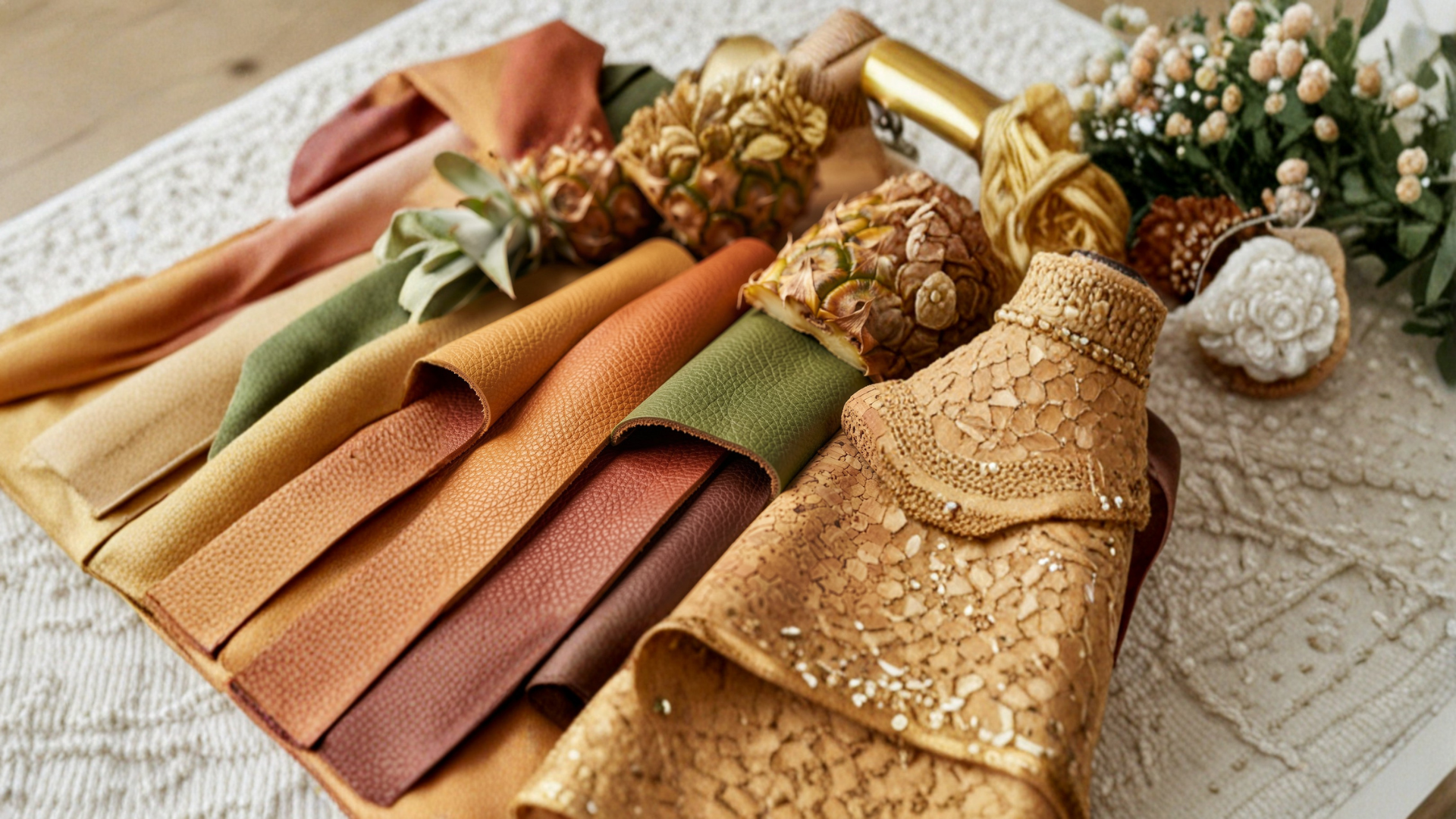
- Plant-Based Leather (The Green Upstart): This sounds the most expensive. Think of the skin of an apple, the leaves of a cactus, or the fibers of a pineapple.
The Red Flag Warning: Most of the time, plant fibers can't hold together on their own with current technology. According to research in material science, most "plant-based" leathers on the market need to mix 30% to 80% polyurethane (PU) as a binder.
In short, most plant leather is just plastic glued together with plant waste.
The Three Types of Vegan Leather
You need to know exactly what you're holding in order to make a smart purchase. We divide the market into three different generations.
1. Synthetic Plastic: Oil in Sheep's Clothing
- What it really is: PVC (polyvinyl chloride) or PU (polyurethane).
- The Truth About the Market: This makes up 90% of the vegan leather market. It is the main part of fast fashion's "Conscious" or "Eco" lines.
- The Eco-Truth: It is a pure derivative of petroleum. Not only does it not break down in nature, but making and burning PVC releases dioxins, which are very harmful to human health.
2. Plant-Composite: The "Semi-Eco" Choice
- What it really is: Agricultural waste, like apple pomace, cactus, or pineapple leaves (like Piñatex), mixed with PU/PVC resin binders.
- The Market Reality: These are the trendy materials that high-end brands use. They usually cost more than real leather from animals.
- The Eco-Truth: We think of this as "half-step sustainability." Compared to 100% PU, it definitely uses less fossil fuels. But it can't fully break down in soil because it has synthetic resin in it.
3. Bio-Grown: The Real Future (If You Can Find It)
- What it really is: Naturally grown mycelium (the roots of mushrooms, like Mylo™) or bacterial cellulose.
- The truth about the market: This is cutting-edge technology. High-end brands like Hermès and Stella McCartney spend millions here.
- The Eco-Truth: It is almost completely free of plastic and can break down completely.
- The Catch: It's hard to scale biology. The costs of making things are still very high. At the moment, it's not easy for regular shoppers to find mature mycelium products at the mall.
What Should You Get Next?
Don't let greenwashing stop you from shopping. You now know more about vegan leather than most people.
We don't want to just give you a summary of what you read. We want to help you choose right now.
If you need to buy a jacket or bag tomorrow, here is what we think you should do:
1. Don't use the word "vegan." Don't pay attention to the marketing tag on the front. Turn it over to the inside label that says "composition."
2. Find the percentage. Put it back if the label says "100% PU" or "100% Polyurethane." You are buying plastic that costs a lot.
3. Look for innovators who don't use plastic. If you want to be truly sustainable, look for brands that use Mirum (which is made from 100% plants and natural rubber) or recycled cork.
4. Embrace used things. The bag that already exists is the most eco-friendly one. Buying a used item of good quality, whether it's vegan or real leather, keeps materials out of landfills.